'%3E%3Cpath d='M16.3574 35.6519H12.9537L15.0491 18.8873L16.3574 35.6519ZM30.4229 54.0093L22.309 0.994385H7.91795L0 54.0093H10.6634L11.5802 46.3855H17.4014L17.9914 54.0093H30.4229Z' fill='%23971B20'/%3E%3Cpath d='M48.2073 41.8813C48.2073 43.4049 47.4892 44.0011 46.1144 44.0011H43.7595V11.0687H46.1144C47.4892 11.0687 48.2073 11.6636 48.2073 13.1885V41.8813ZM59.5273 43.6695V11.3326C59.5273 3.71323 53.5729 0.994385 47.8157 0.994385H31.7213V54.0093H47.8157C53.5729 54.0093 59.5273 51.29 59.5273 43.6695Z' fill='%23971B20'/%3E%3Cpath d='M90.183 0.994385H78.6039L75.0711 30.6157L71.9955 0.994385H59.4346L69.2474 54.0093H80.373L90.183 0.994385Z' fill='%23971B20'/%3E%3Cpath d='M107.063 42.3448C107.063 43.7359 105.951 44.5974 104.643 44.5974C103.269 44.5974 102.157 43.7359 102.157 42.3448V12.658C102.157 11.2676 103.269 10.4058 104.643 10.4058C105.951 10.4058 107.063 11.2676 107.063 12.658V42.3448ZM119.233 43.2723V11.7312C119.233 6.36384 112.952 -3.8147e-06 104.643 -3.8147e-06C96.2667 -3.8147e-06 89.9867 6.36384 89.9867 11.7312V43.2723C89.9867 48.6393 96.2667 55 104.643 55C112.952 55 119.233 48.6393 119.233 43.2723Z' fill='%23971B20'/%3E%3Cpath d='M150.976 43.9349V33.7309H139.069V42.3448C139.069 43.7359 137.957 44.5974 136.582 44.5974C135.076 44.5974 133.964 43.7359 133.964 42.3448V12.658C133.964 11.2676 135.076 10.4058 136.582 10.4058C137.957 10.4058 139.069 11.2676 139.069 12.658V21.2723H150.976V11.0687C150.976 5.70107 145.283 -3.8147e-06 136.582 -3.8147e-06C127.75 -3.8147e-06 121.796 5.70107 121.796 11.0687V43.9349C121.796 49.3022 127.75 55 136.582 55C145.283 55 150.976 49.3022 150.976 43.9349Z' fill='%23971B20'/%3E%3Cpath d='M167.478 35.6519H164.076L166.17 18.8873L167.478 35.6519ZM181.544 54.0093L173.432 0.994385H159.037L151.123 54.0093H161.785L162.704 46.3855H168.523L169.114 54.0093H181.544Z' fill='%23971B20'/%3E%3Cpath d='M205.412 10.4058V0.994385H177.081V10.4058H185.392V54.0093H197.428V10.4058H205.412Z' fill='%23971B20'/%3E%3Cpath d='M230.002 54.0093V43.9349H218.914V31.8746H226.635V21.8028H218.914V10.4058H230.002V0.994385H206.875V54.0093H230.002Z' fill='%23971B20'/%3E%3C/g%3E%3Cdefs%3E%3CclipPath id='clip0_260_7080'%3E%3Crect width='230' height='55' fill='white'/%3E%3C/clipPath%3E%3C/defs%3E%3C/svg%3E)

A Democratic Congressional candidate in Michigan filed a complaint against his transgender opponent alleging that she violated state campaign law by not using her deadname on her application to run in the August primary election.
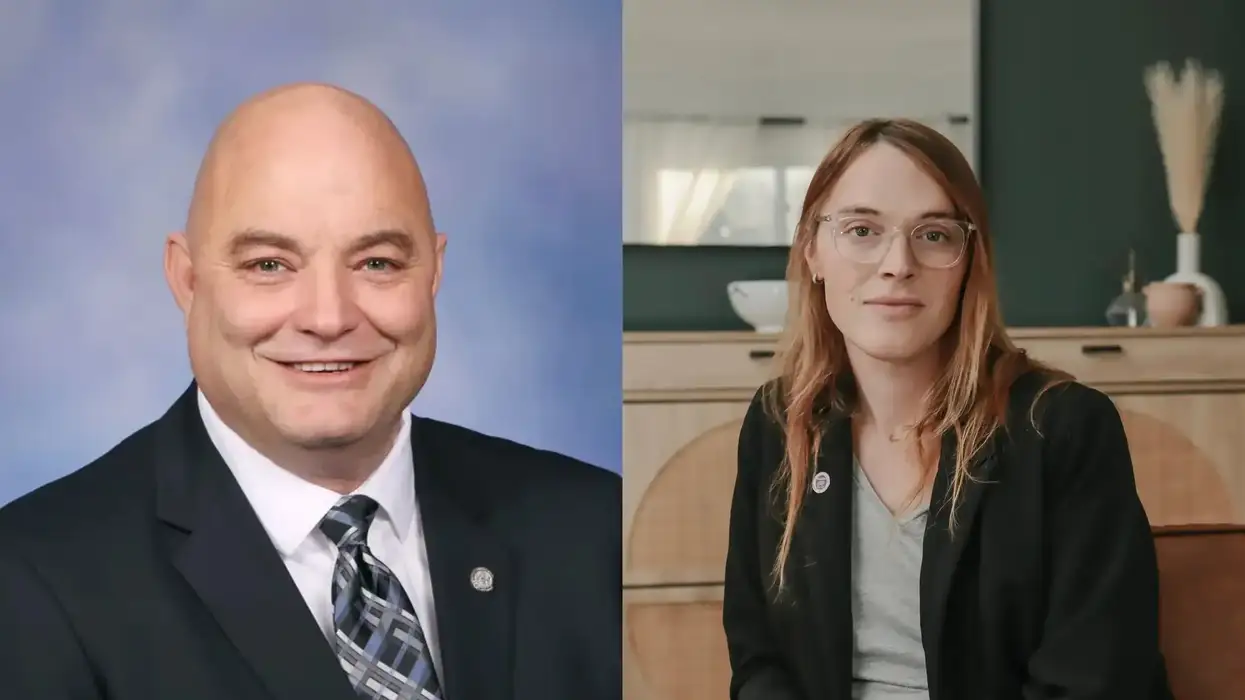
Frank Liberati, a former member of the Michigan House who represented the state’s 13th District from 2015 to 2021, alleges that Joanna Whaley, a trans woman and fellow Democrat running for the same District 2 seat, did not list her legal name on her when she filed to run for office. His complaint to the Wayne County Clerk’s office, first reported by the Michigan Advance on April 30, referenced a name change petition for Whaley from 2023 that was dismissed.
However, Whaley has indeed since legally changed her name, returning to the court after the 2023 petition to complete the process. According to the Michigan Advance, those court records were sealed for Whaley’s safety due to her increasing visibility as a public figure.
Jay Kaplan, an LGBTQ+ rights attorney for the ACLU of Michigan, also told the publication that because Whaley has used the name Joanna for over five years, she would be covered under “common law name changes” anyway, allowing her to legally list her current name on the ballot. According to the State Bar of Michigan, common law name changes are legally recognized by the state and apply to people who begin going by a name other than their legal one for non-fraudulent purposes.
Michigan campaign law states that those who have changed their name must list both their current name and old name on the ballot, if required by the affidavit of identity for the election. The common law name change is an exception to this rule, however, meaning that Whaley would not be in violation of the campaign name law under that reading, according to Kaplan.
“It’s not going to hold because we have all the proof and documents, and I’ve got 100 witnesses who know me by Joanna,” Whaley told the Advance.
Regardless of the substance of the complaint, or lack thereof, the incident has sparked broader discussions about Democratic candidates turning their backs on trans people amid electoral campaigns. The Michigan Legislative LGBTQ+ Caucus condemned Frank Liberati’s attack on Whaley for not deadnaming herself to run for office.
“The Michigan Legislative LGBTQ+ Caucus denounces Frank Liberati’s meritless, transphobic attempt to remove Joanna Whaley from the primary election ballot,” the caucus wrote in a statement. “Weaponizing transphobia as an electoral tactic has no place whatsoever in Michigan politics, and certainly not in a Democratic Party primary.”
In fact, Whaley said she decided to run after Tullio Liberati, her opponent’s brother and retiring state representative for Michigan’s 2nd district, voted in favor of banning trans girls from sports teams in March 2025. She is one of two trans women running in Michigan’s 2026 primary elections, the other being Toni Mua in the state’s 9th district.
Rather than talking about her name, Whaley wants to focus on single-payer healthcare and reducing cost of living expenses such as utility bills for all Michigan residents.
“My hope for future trans candidates is that we’ve gotten bloody enough to bust the hole in the wall that they can just walk through it,” she said. “I’m willing to take those punches to make it easier for folks in the future. And so that’s why, for me, it’s important to not just let this go.”
Frank Liberati did not immediately respond to Them’s request for comment.